If you’ve ever wondered why two induction systems can produce very different results—even when they use similar power—there’s a strong chance the difference lies in the induction heating coil. A coil isn’t just a metal loop that “gets hot.” It’s the core component that shapes:
- how electromagnetic fields are distributed inside the workpiece
- how quickly heat is generated
- what temperatures (and temperature uniformity) are actually achieved
- how efficiently electrical power converts into usable heat
This guide explains how induction heating coils work, how to choose the right design, common problems to watch for, and what’s trending in coil technology—especially relevant for manufacturers in and around Pune that are upgrading induction capacity.
---
1) What an Induction Heating Coil Actually Does
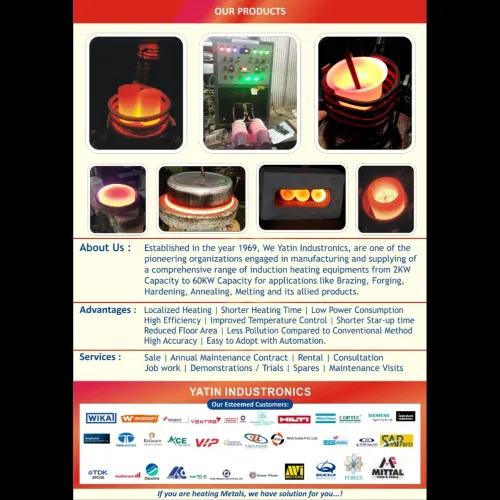
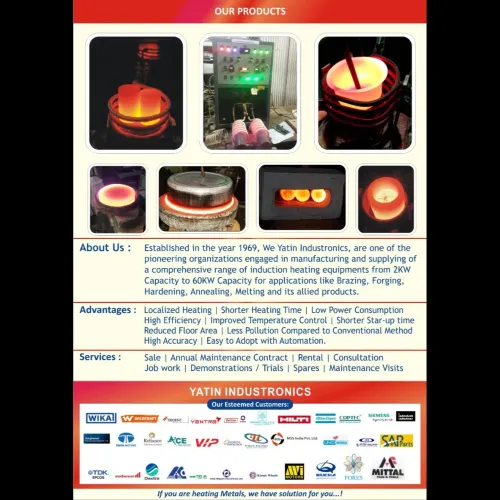
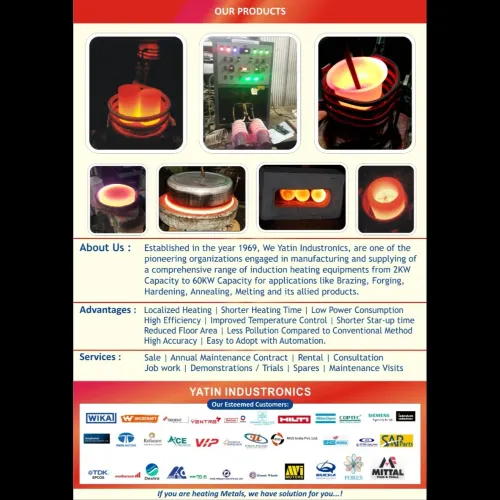
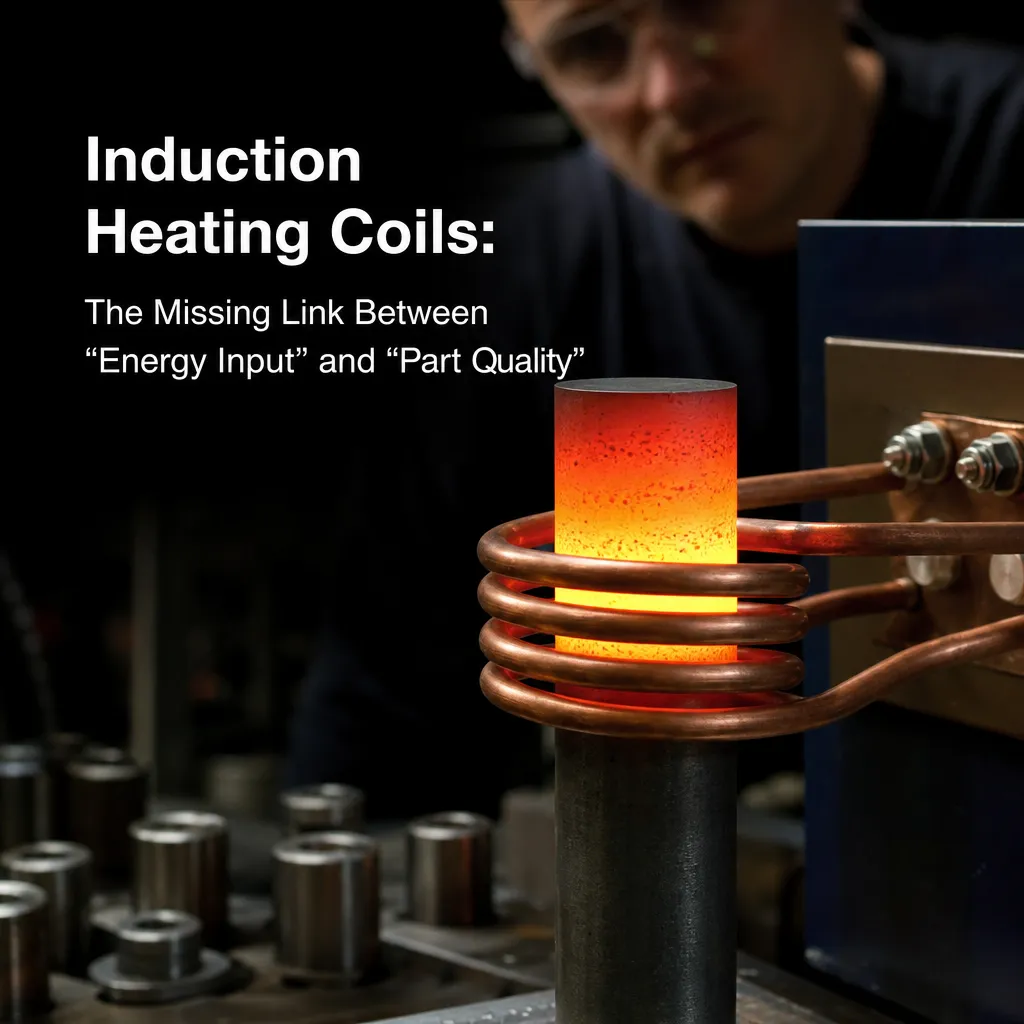
An induction heating coil creates a rapidly changing magnetic field when supplied with high-frequency current. That magnetic field induces eddy currents in the part, which generate heat due to electrical resistance in the material.
Key concept: coil design controls the heating “shape”
A coil determines:
- where current concentrates (surface vs deeper regions)
- how deep heating penetrates (related to skin depth)
- how heat spreads across the surface (geometry + field distribution)
- the stability of heating during production runs
In practical terms, coil selection and coil geometry are often as important as the power source.
---
2) Coil Design Fundamentals (And Why Geometry Matters)
Coil geometry: turns, spacing, and profile
Common variables include:
- Number of turns (affects field strength and distribution)
- Coil-to-work distance (impacts coupling efficiency)
- Coil inner diameter/shape (must match the part geometry)
- Waveform and frequency compatibility (system-dependent)
Even small changes—like increasing clearance by a few millimeters—can reduce heat transfer efficiency and lead to uneven heating.
Copper construction and insulation strategy
Most coils are built with high-conductivity copper due to low electrical resistance and excellent thermal performance. Designers also consider:
- insulation type and thermal resistance
- water cooling or forced cooling channel design
- resistance to fatigue from thermal cycling
---
3) Types of Induction Heating Coils by Application
Different processes need different magnetic-field behavior. Here are typical coil roles:
A) Hardening coils (surface-focused heating)
Used for case hardening or surface hardening where you want controlled depth and temperature consistency. These coils are designed to concentrate heating where hardness is required.
Best-fit scenarios:
- shafts and hubs
- bearings-related components
- localized surface strengthening
B) Brazing and joining coils (repeatable thermal profiles)
For brazing, the goal is often uniform heating across the joint area without overheating adjacent zones.
Best-fit scenarios:
- copper/brass brazing
- assemblies with tight dimensional tolerances
C) Melting coils (higher power + stable thermal control)
Melting involves sustained energy input. Coil selection here emphasizes:
- thermal uniformity
- corrosion/thermal management
- stable power coupling
---
4) How to Choose the Right Coil for Your Product
Choosing the right coil is not a “one-size-fits-all” process. A good selection balances performance with manufacturability.
Step 1: Define the heating requirement precisely
Answer:
- What process? Hardening, brazing, melting, preheating
- Target temperature and heating time?
- Required depth or zone of heating?
- Material type and thickness?
Step 2: Match coil design to part geometry
A coil must “fit the field” the same way fixtures must “fit the part.”
Important fit factors:
- part diameter/width
- corner radii and transitions
- tolerance range (how much the part varies across batches)
Step 3: Plan for real-world constraints on the shop floor
Manufacturers often run into issues like:
- limited loading space (coil access constraints)
- conveyor timing limits (dwell time)
- cooling-water availability and maintenance schedules
A coil design that looks perfect in theory can underperform if it can’t be maintained or operated reliably.
---
5) Coil Cooling: The Silent Driver of Uptime
Induction heating coils carry high current and generate significant heat themselves. Without adequate cooling, coils can experience:
- accelerated wear of insulation
- drift in thermal performance
- reduced power capability and downtime
Cooling best practices include:
- consistent flow rates
- correct water quality (to avoid scaling)
- monitoring temperature and flow during operation
If you’re seeing coil life become unexpectedly short, investigate cooling performance first—it’s a common root cause.
---
6) Common Problems (And What They Usually Mean)
Problem: Uneven heating or inconsistent output
Possible causes:
- misalignment between coil and part
- incorrect coil-to-work distance
- frequency/power mismatch
- coil design not optimized for the part’s geometry
Problem: Lower-than-expected heating speed
Possible causes:
- poor electromagnetic coupling (clearance too high)
- inefficient coil design (turns profile not suited)
- wrong frequency band for your material stack
Problem: Coil overheating or insulation breakdown
Possible causes:
- inadequate cooling flow
- restricted cooling passages
- damage from mechanical vibration or poor fixtures
Problem: Excessive power draw / instability
Possible causes:
- frequency resonance mismatch
- inconsistent workpiece material properties
- coil wear or detuning over time
---
7) Tuning and Customization: Why “Standard Coils” Often Fall Short
While some generic coils can work for low-mix applications, many production environments require customization because:
- parts vary in diameter, length, and surface features
- target heat zones change by product family
- quality requirements demand tighter control
This is especially true for multi-product production where switching coils is cheaper than redesigning the whole heating approach—but still needs careful engineering for repeatability.
---
8) What’s Trending in Induction Coil Technology
Manufacturers increasingly focus on coil systems that support:
Higher efficiency and stable coupling
Better coil geometries and improved engineering reduce energy waste and help stabilize the heating process.
Resonant inverter compatibility
Modern induction power supplies often use resonant inverter designs for more controlled heating. For coil users, this means coil tuning and electrical matching matter more than before.
Faster heating with quality stability
Coils are being designed to deliver:
- quicker heating cycles
- tighter temperature windows
- improved repeatability across batches
---
9) A Practical Example: Upgrading Induction in Pune
If you’re running induction processes in/around Pune—where many manufacturers work with steel components, automotive suppliers, and industrial assemblies—you’re likely dealing with one or more pressures:
- faster cycle times
- stricter hardness/brazing quality requirements
- reduced rework and scrap
- higher energy costs
In those situations, coil optimization often delivers measurable improvements because it directly affects coupling efficiency, heat distribution, and process repeatability—the three areas that most strongly influence scrap rates.
---
10) Where Coil Selection Fits Into the Larger Induction System
It’s helpful to remember: a coil is one part of the induction stack.
A well-performing system typically considers:
- power supply output and frequency strategy
- coil geometry and tuning
- fixture alignment and repeatable positioning
- cooling performance
- material variability and loading consistency
When coils are engineered with these factors in mind, improvements show up quickly—often as steadier heating and more predictable quality.
---
11) Quick Checklist Before You Finalize a Coil Design
Use this checklist to avoid costly iterations:
- Process defined (hardening/brazing/melting)
- Material and target profile documented
- Coil-to-part positioning plan confirmed
- Cooling requirements validated (flow + insulation thermal limits)
- Operating envelope (power range, frequency range, cycle time) clarified
- Quality criteria (depth uniformity, hardness/joint integrity) specified
---
Bringing It All Together
Induction heating coils are where electromagnetic engineering meets production reality. When coil geometry, cooling, and system matching are designed together, you get more than just “heat”—you get controlled, repeatable thermal behavior that directly supports part quality.
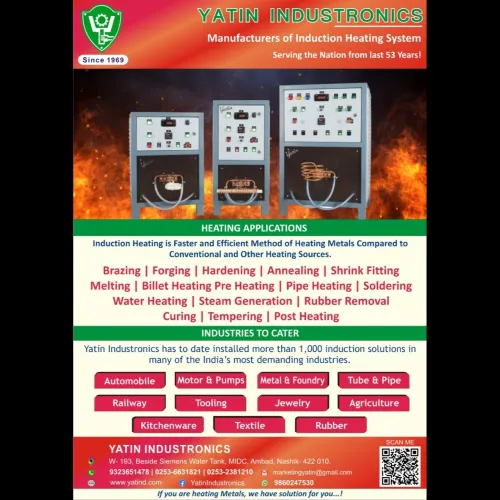
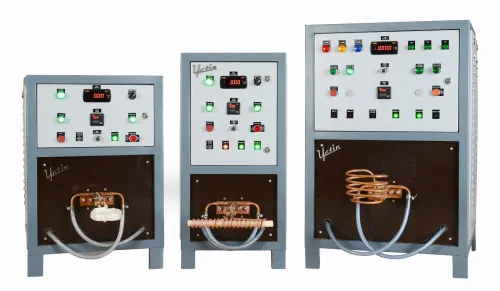
If you’re exploring coil options—such as different induction heating coil configurations—start by reviewing coil design considerations for your specific application. For example, manufacturers often evaluate coil sets and configurations aligned to their product geometry and heating goals, like those found in dedicated induction heating coil product categories on Yatin Industronics’ website. (You can explore induction heating coil options here: https://www.yatininduction.com/products/induction-heating-coils/25.)
That kind of focused starting point helps teams move faster from “we need induction” to “we have the right coil for our heating process,” especially when upgrading lines or scaling production.
Keywords