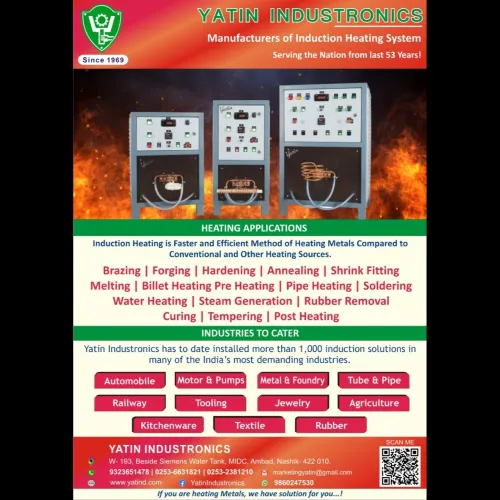
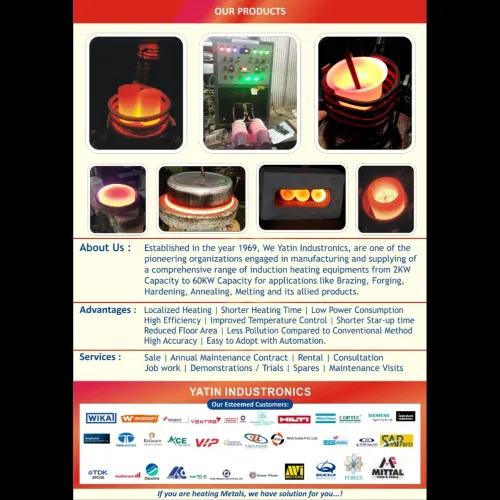
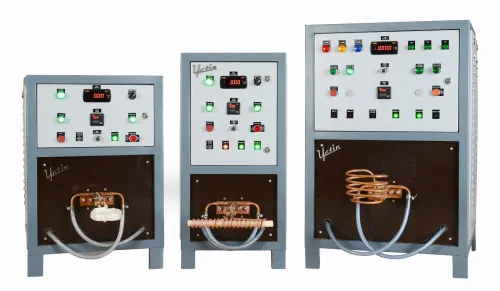
If you’re searching for a tube induction heater, chances are you need controlled heating for cylindrical parts—fast, repeatable, and with minimal waste heat. Tube heating shows up in manufacturing everywhere from brazing and preheating to hardening and stress relieving. But choosing (or specifying) the right induction setup requires more than picking a “heater” and moving on.
This guide breaks down how tube induction heating works, the most common industrial uses, key design considerations, and the mistakes that can lead to poor results.
---
What Is a Tube Induction Heater?
A tube induction heater uses electromagnetic induction to heat a tube or cylindrical workpiece without direct flame contact or electrical contact at the part.
Instead of “heating from the outside” in the traditional sense, induction heats the tube primarily through:
- Induced currents (eddy currents) in the material
- Joule heating where electrical resistance turns energy into heat
Because the heating is localized, induction is often chosen when manufacturers want:
- tighter temperature control
- shorter cycle times
- reduced oxidation or scale compared with furnace heating
- energy efficiency versus conventional thermal processes
---
How Induction Heating Works (in Simple Terms)
Induction systems usually include:
1. Induction coil (the “heater”)
2. Power supply (often an inverter-based generator)
3. Workpiece (the tube)
4. Cooling and controls (for stability and repeatability)
When alternating current flows through the coil, it creates a changing magnetic field. That field induces currents inside the tube. Those currents generate heat—typically strongest near the surface depending on frequency.
---
Why Tube Heating Needs the Right Frequency
One of the biggest technical levers in induction heating is frequency, which affects skin depth—how deep the induced heating penetrates.
- Higher frequency → shallower penetration (more surface-focused heating)
- Lower frequency → deeper penetration (more bulk heating)
For many tube processes, manufacturers tune frequency to achieve:
- the right heating depth for brazing or bonding layers
- uniformity across the tube wall thickness
- controlled heating zones to protect sensitive areas
---
Common Applications for Tube Induction Heaters
Tube induction heating is used across several manufacturing workflows. Here are the most typical ones:
#### 1) Brazing and Joining
Induction is popular for brazing brazing copper/brass alloys to steel components or coupling tubes to fittings. Heating is localized, helping reduce heat damage and speeding up cycle times.
Key benefit: consistent thermal profiles improve joint quality and reduce rework.
#### 2) Preheating Before Forming or Welding
Before processes like welding, forming, or machining, a controlled preheat can:
- reduce thermal gradients
- minimize cracking risk
- improve material flow and workability
#### 3) Heat Treating (Hardening, Tempering, Stress Relieving)
For certain tubes (especially ferrous materials), induction can deliver fast heating to controlled targets, supporting:
- hardening of specific regions
- tempering with repeatable temperature control
- stress relief with minimal distortion compared to longer furnace cycles
#### 4) Melting or Localized Heating (Where Applicable)
Depending on material and setup, induction can provide localized heating for specialized melting tasks or thermal processes.
---
Coil Design: The Difference Between “Hot” and “Right”
For a tube induction heater, the coil isn’t just a component—it’s part of the heating “equation.”
Coil design considerations often include:
- Coil-to-tube gap: affects coupling efficiency and heating uniformity
- Coil geometry: determines heating profile along length
- Tube diameter and wall thickness: influences energy absorption
- Heating zone control: especially important for brazing and joining
In many real production scenarios, the biggest reason for inconsistent results is not the power supply—it’s the mismatch between coil geometry, tube dimensions, and the desired thermal profile.
---
Temperature Control: What “Accurate” Really Means
Temperature control can be the deciding factor between a good process and a failed batch—especially for brazing, hardening, and sensitive alloys.
Look for systems that support:
- stable output under varying tube properties
- precise control of temperature rise and hold times
- repeatable heating cycles across production runs
Many induction systems now use advanced inverter-based technologies to improve responsiveness and control. When done right, it helps manufacturers reach target temperatures faster while keeping energy usage under control.
---
Process Planning: How to Specify a Tube Induction Heating Setup
If you’re evaluating a tube induction heater for production, prepare these inputs up front—because they drive everything:
- Material type: carbon steel, stainless, copper, alloy grade, etc.
- Tube dimensions: outer diameter (OD), inner diameter (ID), wall thickness, length
- Process goal: brazing? hardening? preheat? stress relief?
- Required heating zone length: where heat must be applied (and where it must not)
- Temperature range: target temperature and acceptable tolerance
- Throughput rate: cycle time and production volume
- Loading method: manual, semi-automatic, or automated positioning
- Consistency requirements: how uniform the heating must be across length and circumference
A clear spec helps avoid “trial-and-error” commissioning later.
---
Common Misconceptions to Avoid
#### Misconception 1: “Induction heats instantly, so uniform heating is automatic.”
Induction heats based on electromagnetic coupling, skin depth, and coil geometry. Uniformity often requires careful setup—especially for thicker walls or longer heating zones.
#### Misconception 2: “Any coil will work with any tube.”
Coil designs are highly sensitive to tube OD/ID, material, and desired profile. Even small dimensional changes can shift heating behavior.
#### Misconception 3: “Higher power always gives better results.”
Overpowering can overheat the surface, create uneven thermal gradients, or damage components. Better control beats brute force.
---
Why Tube Induction Heating Is Popular in Industrial Production
Manufacturers often prefer induction for tube processes because it can deliver:
- Faster heating and shorter cycle times
- Lower overall energy use (localized heating rather than heating an entire furnace load)
- Reduced oxidation/scale compared to some conventional methods
- Repeatability—especially valuable for multi-shift production
For tube-related operations, these advantages translate into better throughput and fewer quality issues when the system is properly engineered.
---
A Practical Example: Tube Brazing in a Production Setting
Imagine a line where steel tubes must be brazed to fittings on every shift.
A successful process typically requires:
- consistent heat-up time so brazing material flows properly
- stable target temperature to avoid weak joints
- controlled heating zone to protect nearby seals or coatings
- a repeatable cycle that operators can run without guesswork
This is where tube induction heating becomes especially valuable: it provides localized, controlled energy to the joint area—supporting both quality and productivity.
---
Quick Checklist: Are You Choosing the Right Tube Induction Heater?
Before purchase or final system design, confirm:
- Coil design matches tube OD/ID and heating zone needs
- Frequency and power strategy align with the desired heating depth
- Temperature control is stable and repeatable
- Your cycle time requirements are realistic for the material and thickness
- Automation/loading method fits your production workflow
If you’re working in a manufacturing hub like Pune, having a setup engineered for local production constraints—space, throughput, and shift schedules—also matters. Many industrial users prefer working with experienced system integrators who can help translate real-world tube specs into a reliable heating process.
Keywords